Thursday, 21 March 2013

Tuesday, 5 March 2013
Linking theory side of media to the practical side
Age ratings
In our theory lesson, we looked at age ratings. This could
link to our practical lesson as it gives us an idea of who our target audience
is. My group and I have made the decision that our introduction/title sequence which
has the theme of horror will be aimed at people our age, 16+. However it made
me think about what types of things to include because although it is aimed at
this age, people younger may want to watch it. Although films have age ratings
indicating the age you must be to buy them, this does not stop people under
that age watch them once they are in the home. For example a mother could buy
it for their child although they are under that age. Something else that came
up in the theory lesson is that parents have a say in what their children watch
and they have the responsibility of allowing or disallowing their children to
watch films. This can relate to our practical lesson in the way of what to
include. It is aimed at the age of 16 but some younger teenagers may also want
to watch it. Although this is something that would never be released as a film,
we must still think of it in a realistic way and link it to the real film
industry. We would not want to include anything that would stop parents
allowing their children to watch it as a wider target audience is created.
Film category's
In both the practical and theory side of media, we look at different films as examples to the work we are doing. Know the categories those films could possible be in helps us understand them as bit more.
The different film categories of British films are:
- Category A - Films made with British personnel, money and resources.
- Category B - Films that are co-funded with money from British and from foreign investment, but the majority of finance, cultural content and personnel are British.
- Category C - Mostly foreign involvement
- Category D - American film with some British involvement
Cinema showings
Some films are shown in some cinemas but not others not shown in one cinema more then other ones. Their are many reasons for this but two that I can think of are cultural areas and large populated areas. If there is a particular area where a lot of people life after moving from abroad, they would show films more aimed at them from their culture in the cinemas nearest them rather then places where there are not as many people from other cultures. This is similar to age, if there is an area where the majority of people are in early 20s - 30s, they wont show a film aimed at older citizens. Also in the larger cinemas, such as the Ciniworld in Milton Keynes, alot more films are going to be shown because a lot more people go there and alot more people pass through. On top of this there are alot more screens so the cinema are are able to show alot more films at a time rather then a smaller cinema in a less populated area. It is all about the cinemas making money. The busier cinemas are bound to make more money.
A good example of this is from when I lived in Sussex. I would go to the Crawly cinema which was a very large cinema with several floors and screens. Crawly also had a large population of different cultures in the community so there was often films aimed at their culture showing in the cinema. This cinema was a ciniworld cinema which has a hole selection of Bollywood films available for viewing. This is an example the cinemas widen their target audience, something we look at in our piratical lessons when creating our own work. All though our target audience is mostly to do with age, it is use full to have a wider idea of how target audience affects films in the real media world.
Saturday, 2 March 2013
My TAP
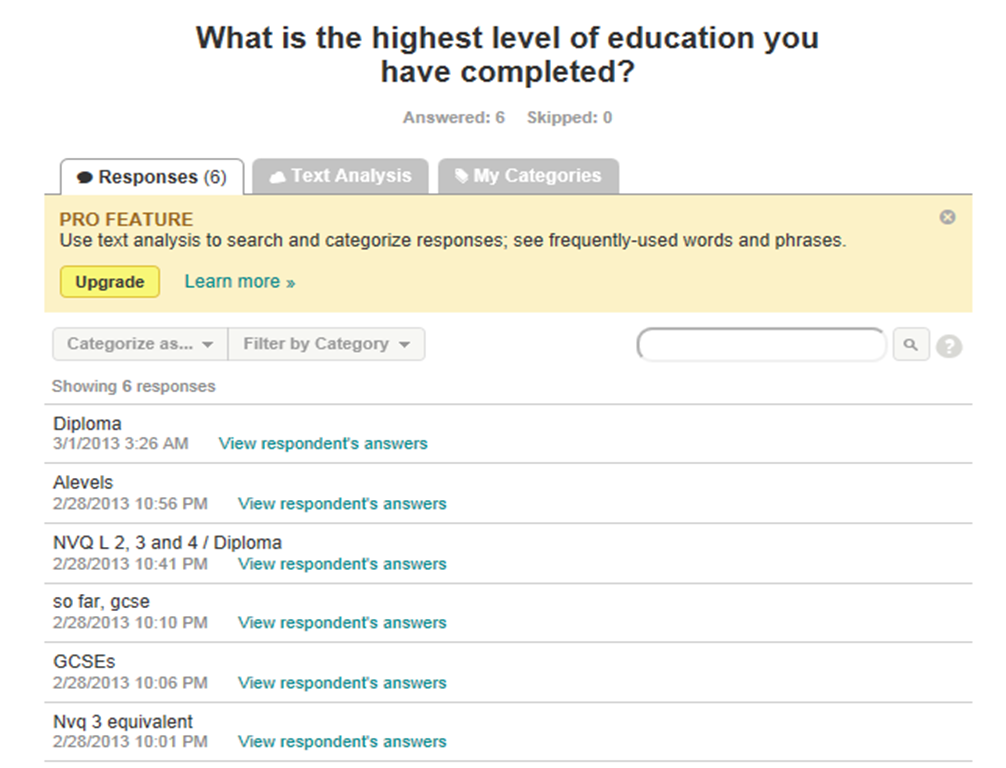
Responses on survey mokey in graph form
Demographic Target Audience Questionnaire Results
We asked people who watch horror films fill in this questionnaire and it was answered by 6 people


Psycographic Target Audience Questionnaire Results
this questionnaire was answered by 11 people


Results from hand out sheets (handed out to our age range in the Sixth Form study room)


Although some people answered no, some still gave use full information in the other questions.
People who answered yes (4 people)
age 16 - 0/4
age 17 - 3/4
age 18 - 1/4
age 19 - 0/4
Male - 1/4
Female - 3/4
Who they watch it with
Family - 0/4
Friends - 4/4
On their own - 0/4
Whether they have a job
Yes - 2/4
No 2/4
Do they buy the newest films out
Yes - 0/4
No - 2/4
Sometimes 2/4
How much are they willing to pay
£5-£10 - 1/4
£15-£20 - 2/4
£20+ - 1/4
What makes them buy films
Friends - 1/4
Family - 0/4
Adverts - 1/4
Social media - 0/4
Other - 2/4
Other answered = Personal preference
whether i like it or not
People who answered no
age 16 - 4/5
age 17 - 0/5
age 18 - 1/5
age 19 - 0/5
Male - 3/5
Female - 2/5
Who they watch it with (one person answered this question "i don't"
Family - 0/5
Friends - 4/5
On their own - 0/5
Whether they have a job
Yes - 2/5
No 3/5
Do they buy the newest films out
Yes - 1/5
No - 1/5
Sometimes 3/5
How much are they willing to pay
£5-£10 - 3/5
£15-£20 - 0/5
£20+ - 0/5
2 people answered other .......£5 - £15 and £5 - £20
What makes them buy films (people selected several answers)
Friends - 1 tick
Family - 2 ticks
Adverts - 3 ticks
Social media - 1 tick
Other - 2/4
Other answered = "I like owning a film instead of watching it online or just waiting for it to be shown on TV"
People who answered sometimes
age 16 - 0/4
age 17 - 2/4
age 18 - 2/4
age 19 - 0/4
Male - 0/4
Female - 4/4
Who they watch it with
Family - 0/4
Friends - 4/4
On their own - 0/4
Whether they have a job
Yes - 4/4
No 0/4
Do they buy the newest films out
Yes - 0/4
No - 1/4
Sometimes 3/4
How much are they willing to pay
£5-£10 - 3/4
£15-£20 - 1/4
£20+ - 0/4
What makes them buy films
Friends - 0/4
Family - 0/4
Adverts - 3/4
Social media - 1/4
Other - 0/4
TAP
TAP stands for Target Audience Profile. It is research and information about the target audience for our introduction sequence. The point benefits of having a TAP is that we can focus on that when we are planning so our title sequences is well suited for the ages it is aimed at. On top of this, it also gives us ideas and examples of what we should use when filming, for example, what should be shown. Having a TAP also helps our group stay on track, we are all working from the same ideas rather then all having different ones (although these can be included as well). It also means that our group can work more consistently and not having to stop to get more ideas as we have them there already. The TAP also helps us to stay on track, we can focus on what information we have got from our target audience and not go off track which in turn means that less missteps in our planning and development will take place. The TAP is now our main focus point.
Questionnaires are a good way of finding out information from our target audience. There are two different types of questionnaires, Demographic and Physographic.
Demographic questionnaires look at:
- Who the person is
- Their age
- Their gender
- Their job
- Their location
- Their marital status
- Their income
- Their education level
- Their nationality
So this is very much the person them selves and what type of people are interested in buying horror films, is it mainly single men? Do people with a lower income tend to bye less films? Does any of this really effect their film choices at all?
Psychgraphic questionnaires look at:
- Why they do what they do
- price sensitive customers
- weather people prefer to buy the newest, fashionable films
- and weather people are open to choosing new, unproven films
This questionnaire is very focused on what makes people bye the films they do.
I created one of each of this questionnaires on survey mokey and uploaded them on top my facebook page and then asked people to share the link so there was a wide range of people who could answer it. Below are the links to both my questionnaires.
Tuesday, 26 February 2013
Assessment of other student Title sequences

Above is the marking criteria for a video task. I have looked at a video on you tube to assess using the marking criteria.
This video was done for AS coursework by the people involved.
Holding shot steady
In the first clip, students are in a dark room with what looks like a Luigi board. In this shot there is no camera movement at all. There is a lot of camera movement (shaking) when the clip changes to letters spelling out words and peoples faces. However the movement if very strong and watching i got the feeling this movement was done for effect and looked really good and worked well in the video. When the shot changes from the faces, the camera once again remains perfectly still. After this, the clip changes to a group of people walking. When the group is being filmed from a distance there is no camera movement. However one person is being filmed walking using an over the shoulder lot. There is some un intended camera movement here as the person holding the camera and filming walks behind the person being filmed. This is the only bad and un intended camera movement in the video. I think the movement of the camera is excellent in this video and comes under a level 4.
Framing shot appropriately
I think the shots are really good in this video. When filming of the group takes place all the people are central. No one is off frame and all the people involved can be seen. There is also no unnecessary background. The screen is always full and everything is perfectly laid out so the viewer can see everything that is going on. There is never any wasted space on the screen.
Variety of shot distances
A lot of different shots are used in this video. The shots i noticed were:
- Establishing shot (When the people enter the building and when walking outside)
- Wide Shot (when walking outside)
- Long shot (the people walking outside)
- Medium close up (The faces of the people when camera is shaking)
- close up (when looking at the Luigi board)
- extreme close up (shots of people eyes)
- over head shot (looking down at the people in the dark room)
- Low angle (looking up at the person in the window in the dark room)
- Deep shot (people walking)
- Medium shot (when the girl has rope put round her neck)
- Luigi board
- cards
- rope
- a candle
- book
Because there is such a wide range of camera shots, i would say this would come under the level 4.
Appropriate Material for the task
I think at the vary start in the darkened room is the strongest point of this video regarding showing the theme of horror. The rest of the video does not show much in the way of horror. . However the horror type filming is shown for over half of the video. All the footage show is very strong and the idea is carried out through out the video. I think this ares would come under level 3.
Selecting mise en scene
I think the mise en scene is good in this video. At the start quite a few props are used.
I think all these props were uses really well and all help relevance to what was going on. No prop seemed out of place or unused. They also help the viewer get an idea of what is happening, what is going on and what the students are doing.
The costumes are very basic but then i think that is all that is needed for this video. The people involved just wore what they were wearing but seeing as they were playing students anyway, not costumes were truly needed. I think for mise en scene, the video could be graded a level 4.
Editing for meaning to the viewer
In this video, at the start the footage is sped up. I think this is a really good affect and it makes the movements a lot sharper and looks really affective with whats happening in the clip. It also keeps the views focus and makes what they are watching more interesting rather then a lot of slow movement.
Short lack fade outs and fades in are also used during this time which adds to the affect. It adds something different to watching the same thing constantly and creates a good contrast between the fast movement ans slow blackouts. This footage was also made black and white which fits whats happening perfectly and makes it seem aerie fitting the theme of horror. The theme is also brought out when the footage of a girls face and then her being strangled are merged as it adds a ghost looking affect. The use of a heat camera effect, although only use very quickly and for a short time, still adds great affect to the video and adds a bit of interest. The main part of editing is getting the clips placed together correctly involving movement match. I saw no problems with movement match in this video. Because of this and the range of editing skills used i think this would come under level 4.
Varied shot transitions, captions and other effects
There is not a range of shot transitions but the transitions, although quite quick cuts do not seen untidy. There is no judders between cuts and movement continues to be smooth. The transitions from clip to clip are very well done.
I think the placing of captions and texts are very poor. The names of people involved appear on hands and i think they look very out of place and randomly put there. They don't blend in the the surrounding much but at the same time they don't really stand out. At one point text is placed over a girls thumb and it is not in line with her thumb but instead quite wonky. I think this takes away the affect of the wording being there. Also the text font used never remains constant which i feel looks quite bad. I think this will come under level 2.
Use of sound with images and editing
There is really aerie music used during the start of the opening sequence. I think this music fits really well with what is going on on screen and ties in the theme of horror. I think the music also fits with the actions that can be seen as the speed of the music is in time with the speed at which things are happening and movement is being made. The music also ends well and it does not fade into the conversation but also does not end to abruptly. When the people in the video are talking their voice and what they are saying can be herd really well and very clearly. This is important in a video and the sound for this video is really well done. There is a point where the clip changes but a voice can still be herd. However that voice fades out really well and effectively. I think the sound for this video would come under level 4.
Varied shot transitions, captions and other effects
There is not a range of shot transitions but the transitions, although quite quick cuts do not seen untidy. There is no judders between cuts and movement continues to be smooth. The transitions from clip to clip are very well done.
I think the placing of captions and texts are very poor. The names of people involved appear on hands and i think they look very out of place and randomly put there. They don't blend in the the surrounding much but at the same time they don't really stand out. At one point text is placed over a girls thumb and it is not in line with her thumb but instead quite wonky. I think this takes away the affect of the wording being there. Also the text font used never remains constant which i feel looks quite bad. I think this will come under level 2.
Use of sound with images and editing
There is really aerie music used during the start of the opening sequence. I think this music fits really well with what is going on on screen and ties in the theme of horror. I think the music also fits with the actions that can be seen as the speed of the music is in time with the speed at which things are happening and movement is being made. The music also ends well and it does not fade into the conversation but also does not end to abruptly. When the people in the video are talking their voice and what they are saying can be herd really well and very clearly. This is important in a video and the sound for this video is really well done. There is a point where the clip changes but a voice can still be herd. However that voice fades out really well and effectively. I think the sound for this video would come under level 4.
Using titles appropriately
I think the title is really well used in this clip. I like how all the focus is on the title as it is the only thing that can be seen on screen. This makes the title stand out. I think this would come under level 4.
Conclusion
I think this is a very strong, well presented video where all the shot sizes and editing was used correctly. I think improvements could be made with the text.
Director Wes Craven

Wes Craven is a Director, Writer and producer. He writes and directs mostly horror films.
Background
Wed was born in the suburbs of Cleveland, Ohio on August 2nd 1939. The first film he wrote, directed and edited himself was 'The Last House on the Left' which was released in 1972.
Films
Wes wrote and directed 'Nightmare on Elm Street' which was released in 1984. However he did not go on to direct the 5 sequels to this film.
In 1996, Wes Craven became very successful with his film release of 'Scream'. This film became the winner of MTV best movie award. Wes almost turned down the opportunity to direct 'Scream' because the first scene reminded him too much of his first film 'The Last House on the Left'.
The other films Wes directed are:
- Scream 4 - 2011
- My Soul to Take - 2010
- Paris, Je t'aime - 2006
- Red Eye - 2005
- Cursed - 2005
- Scream 3 - 2000
- Music of the Heart - 1999
- Scream 2 - 1997
- Scream - 1996
- Vampire in Brooklyn - 1995
- New Nightmare - 1994
- The People Under the Stairs - 1991
- Night Visions (TV Movie) - 1990
- Shocker - 1989
- The Serpent and the Rainbow - 1988
- The Twilight Zone Saga - 1985-1986
- Deadly Friend - 1986
- Chiller (TV Movie) - 1985
- A Nightmare on Elm Street - 1984
- The Hills Have Eyes part 2 - 1984
- Invitation to Hell - 1984
- Swamp Thing - 1982
- Deadly Blessing - 1981
- Stranger in Our House - 1978
- The Hills Have Eyes - 1977
- The Fireworks Women - 1975
- The Last House on the Left - 1972
This is the triler for another one of the films Wes Directed, 'My Soul to Take'
Techniques
Wes Cravens films have been described on the IMDb website to challenge audiences with "bold visions". Wes was also said to have reinvented the genre of youth horror.
Trade mark techniques from Wes's film include:
- The use of elaborate booby traps to catch the villain
- strong female characters are within the film
- films include un-glamorous deceptions of sadistic and realistic brutal killers
- films include brutal and graphic violence
- the villains are often deformed and monstrous looking
- his films contain important social issues
- children getting deformed or murdered by the villain


Friday, 15 February 2013
Director Review for opening of Cabin in the Woods
Cabin in the woods
http://www.artofthetitle.com/title/the-cabin-in-the-woods/
Director: Drew Goddard
Director: Drew Goddard
Drew Goddard says that the original idea for this film was that there would be no title sequence and the film would start with the view of a copy machine. There was a certainty however of having the title of ‘Cabin in the Woods’ appear during a conversation about baby proofing a house. The director said, because the start of the film seems irrelevant, he was “delighted by the idea that the audience might think they walked into the wrong film”. Drew Goddard said this was kind of the idea, to trick the audience. However, this became a concern when it was sent to the studio. The production company found a way to keep the brake room scene and still make the audience aware they were in the correct film and there was the theme of horror in the film. This was where the blood scene came in.
Drew wanted a sense of history involved in the title sequence to suggest “other themes were at play” which is why the historic images were used in the blood scene. The idea was to like sacrifice into the film, the director said he wanted it in a historical context and “feel bloody”.
A choice was made of when to cut from the blood scene to the break room scene based on the music used. The music used during the blood scene was described by the director to “build and swell” and the choice was made too cut to the break room scene when the music reached its crescendo. This would be a sudden stop. Drew said this “sets the tone immediately “and shows the audience what type of film it is.
With the blood scene, the decision was made for CGI not to be used because it would seem slick.
Instead the choice was made for ink to be used to create the ‘blood’. A trial and error technique was used with trying to get the correct consistency to make the ink look like blood when filming. Because the camera moves from one puddle to the next, the ink had to be easy to guide. The technique that was used was shooting chocolate into relief moulds that were made out of blue play doh. This way the blue could be keyed out and changed to red and they got the correct effect.
Instead the choice was made for ink to be used to create the ‘blood’. A trial and error technique was used with trying to get the correct consistency to make the ink look like blood when filming. Because the camera moves from one puddle to the next, the ink had to be easy to guide. The technique that was used was shooting chocolate into relief moulds that were made out of blue play doh. This way the blue could be keyed out and changed to red and they got the correct effect.
Subscribe to:
Posts (Atom)