
Wednesday, 1 May 2013

Title Sequence Essay
Title
Sequence
Theme of
Video: Horror
The task we
were set was to create a title sequence for a film. The film could be of any
genre and could be a film that we made up. We were to make the video at least 3
minutes long and use a range of filming techniques. We were also set the task
of thinking about what is seen in professional title sequences and how they are
laid out and shown and develop our ideas from there. By doing this project, I was hoping to develop
my understanding of title sequences as a hole and the process professional film
makers go through. Also the importance of the style used when creating the
title sequence. In the title sequence even the style of text is important. This
must represent the genre and be something that can be memorable and not plain
and simple. For example, the font used for Star wars if so iconic it will
always be recognised and linked to the Star Wars films. Obviously I cannot
create something on this scale but I want to understand how something as small
as text is important. I also wanted to work with and understand how the title
sequence introduces the audience to the film and eases them into it. A title
sequence gives the audience an idea of what type of film it is, what it is
about and in a way, the style of filming used. This is an important part of the
title as it begins the film and has to grab the viewer’s attention straight away.
This is something I brought into my own work.
For this
task, I worked in a group of three, including myself. The people I worked with were Kirsty White,
Charlotte Bowden. We made the decision to go with theme of horror. We chose
this theme because it is something that appealed to all three of us in the group.
We also saw it as an opportunity to work with different, low lighting for
example. This is a technique we could build on in a horror title sequence but
not as much is other films, such as a romance which usually uses bright,
natural lighting. Moreover, when brain storming ideas, we found we had a lot of
ideas we could link to horror and develop. We found that the type of ideas we
were coming up with were always leaning to the horror side of theme and we did
not have much in the way of other ideas. I feel this is because this is the theme
we were mainly thinking off and focusing. We were more than happy with the
ideas we had a chose to stick with it.
In terms of
planning, I feel I took the lead role in this group. I was the one that led
most of the organisation and in lessons, I found I was the one giving Charlotte
and Kirsty the task that needed to be done and what I wanted them to do. They
would often work together on these task but they would also carry out independent
research and work. When we worked with
research, we all worked together to get the information we needed. When we carried out the TAP (Target Audience
Profile) we made the decision to use a questionnaire as the best way to gather
information on what people expect to see in horror films. As well as this we
went and asked people what they expected to see I a horror film and filmed
their answers so we could take information from there. We devised this
questionnaire as a group, working together to come up with the questions. We
thought this was the best way of creating a successful questionnaire as we had
some different ideas of what needed to be included. . I then went onto a
website and created an online questionnaire to help our group. Charlotte and Kirsty
did also have an input with this. However, once again, I feel I took the lead
role. Once the questionnaires were created with worked together to gather the
information and then we separated as a group. We had handed out the
questionnaires and got people of our age range to fill them out. Charlotte and Kirsty analysed and collected
the data from the completed questionnaires in a different way to me. I think
this is mainly to do with how we understand and look at data like this. They
worked together to collect the data and I became more in depended at this
point. We worked together again however when collecting information from the
video answers. Once we had all collected
the data we begun working together again to process this data and work on our
ideas. When coming up with the ideas for our introduction, we worked together.
I think this was important because it meant we could all have an input into
what was shown in our video and we all had a chance to pitch our ideas. What we
did not want to happen was for one person not to have and ideas used. We each
came up with a few ideas and then we agreed with some ideas or in some cases we
would build on that one person’s idea as a group. I found this was an efficient
way of carrying out the task and all three of us having a say. I think all our ideas were listened to and
considered equally. When creating the storyboard, Charlotte and I created it
together. This is because Kirsty was absent on the day and Charlotte and I made
the decision it was important to get the story board done even though we had a
member of our group absent. We still made sure to include Kirsty’s ideas how
she described them and how she had written it down. We got the storyboard
completed and showed it to Kirsty to see if she liked what we had done, once
again working to include everyone in our group. She agreed with what we had
done so moved on to the next part. This was location planning. We thought about
where we were going to film the scenes we had chosen. We worked together to
come up with the ideas of where the filming would take place. We decided as a group that we would do the
some of the outside filming in a woodland area, as well as at a house and in
someone garden. We made the choice to film at my house as it is close to a woodland
area and I have a garden suitable for other outdoor filming. It was later that
Charlotte and I sat down and planned exactly where each shot would be filmed.
This consisted of labelling each clip, for example, we chose my garage as a
place for some filming to take place and like specific clips to that area. We
did the same for woodland filming and outdoor door filming. We found this
easier as we could them grope the clips and get them all done when in that area
rather then moving from place to place. This was an area of organisation both
Charlotte and I worked on together; once again, Kirsty was absent. As well as
working as a group on the majority of the work, we also did some individual
planning and research during the project. This consisted of us doing our own
research for blog work including research on title sequences, although we did
research this breathily together, we did our own research on it. This was
because we did not always get the chance to work together and the research was important
to our work. Time planning was also a key element to planning. We had a
deadline for this project which we had to stick to. A lot of the work was done
in lesson but we also did work outside of lessons to reach this deadline. I
personally worked in free lessons I had during the day as well as other free
time I had, if I knew the work needing doing I set my self a deadline and
worked to ensure I met that so I could move on. In terms of group work, if we
did not complete it in lesson, we worked on it together to get it done in the
chances we had to work together, mainly in free lessons. One of the problems we faced when filming was
finding dates to film. All out filming was to be done outside of the school and
this meant we would have to work with weekends and in the afternoons. We made
the decision that in the afternoon after the school day was not an option. We
would have very little time to get any filming done and it may seem rushed. Ideally
we wanted a full planned to film. Luckily, we had a half term and took
advantage of this and set two days free to get together and film. Absents in
the planning stages did take place but was not a problem, the people in the
group who were present worked together to insure the planning was done.
When we
started filing, some changes did take place from the planning stage. One of
these changes was added scenes. When we started filming, we were going with the
storyboard. However we found that while we were filming and in the filming
environment, we came up with more and more ideas to include. This benefited our
work because a lot more was included and showed a wider range of ideas. These
added scenes also meant that the storyboard need change so Charlotte and I (Kirsty
was unable to attend the first day of filming due to illness) worked together
to redo the story board and add in the new scenes. This is the most major
change that took place. As for the scenes, they were all filmed how and where
we planned apart from one. This was a clip where a photo was burnt. Originally,
the photo was to be held in the hand of the main character and he would use a
lighter to set fire to it. However, this became a problem when filming as we
could not get the photo set alight. This was due to both the weather and the
lighter. When we tried with matched, we were met with the same result; the
photo would not set alight. We moved on to using a large metal bin with a lot
more paper in it, already alight and the photo would be thrown in to that. This
worked much better and we were able to get a really good, successful shot. This was a smaller change but did have an
effect of our video and was a change from what was planned. However my group
and I agreed this was a change for the better. I do not feel they affected our
organisation to much; the redoing of the story board took more time to do but
was vital if we wanted to include the new scenes. I do not think it affected our planning but I do
think it improved it.
A change
that took place in editing was linked, once again, with the story board. We put
the clips in the order we had planned. However when we watched them all linked
together, there were some clips that did not look right on after the other. The
example of this was a body falling to ground filmed in day light after a shot
of a murder and the body being laid on the ground. We, as a group working on the
editing process, made the decision theses clips did not fit together so we made
to choice to spread them out in the full video. This made a difference to the
video and improved the look of it. Another place we changed the order was a
body falling to the arm and then a clip of just the arm falling. However we
found a continuity error so cut the arm clip out completely, once again making
an improvement to the video. Luckily this did not affect our time as both
actions were very quick. However it did mean we had to change the storyboard
again. We did not see this as a problem as when we had to make the first
change, Charlotte made a storyboard on the computer. This meant it was just a
case of moving the names of the clips about until they were in the correct
order.
From this
project I learnt about the importance of the layout and the order of the title
sequence. I did not realise before this project that the names in a title
sequence are in a set order, for example, the directors name is always show
before the names of the actors. I also learnt how title sequences are use. They
are not only used to start the film and list names but also to introduce the
film and introduce the viewers into it. On top of this, my group and I worked on our filming techniques including
how to keep the camera steady and the importance of having a still shot. Two
ways we develop and used as a group in filming was ways you keep the camera
still. In some shots we attached the camera to a tripod to ensure it did not
move. In another shot, when the camera
moved along the old table, we put the camera on top of a toy bus with wheels
and pushed the camera along. This gave it a much smoother, steadier shot
compared to if we had filmed it holding the camera. This is one of the main
techniques we developed and learnt doing this project.
I do not
reel any problems occurred in the project, just changes that we made to improve
what we were doing. I don’t think this should be avoided as it is development
on our work and is just something that came up during the project.
I am happy with
the resources we had to carry out this project. We used Windows Live Movie
Maker for all the editing and, personally, I found this really easy and simple
to use. It allowed us to complete the task and ass the elements we wanted. I
found no complications using the software and I am happy with the result we
got. We also used a online resource to get the type of text we wanted, I found
this efficient and offered a lot of text for us to choose from allowing us to
find the text to match the style of our title sequence.
I feel this
was a really successful project. We did not come cross any problems and
complications, we reached our deadline and the end result looks good and is the
high standard we wanted.
Tuesday, 2 April 2013

Thursday, 21 March 2013
Tuesday, 5 March 2013
Linking theory side of media to the practical side
Age ratings
In our theory lesson, we looked at age ratings. This could
link to our practical lesson as it gives us an idea of who our target audience
is. My group and I have made the decision that our introduction/title sequence which
has the theme of horror will be aimed at people our age, 16+. However it made
me think about what types of things to include because although it is aimed at
this age, people younger may want to watch it. Although films have age ratings
indicating the age you must be to buy them, this does not stop people under
that age watch them once they are in the home. For example a mother could buy
it for their child although they are under that age. Something else that came
up in the theory lesson is that parents have a say in what their children watch
and they have the responsibility of allowing or disallowing their children to
watch films. This can relate to our practical lesson in the way of what to
include. It is aimed at the age of 16 but some younger teenagers may also want
to watch it. Although this is something that would never be released as a film,
we must still think of it in a realistic way and link it to the real film
industry. We would not want to include anything that would stop parents
allowing their children to watch it as a wider target audience is created.
Film category's
In both the practical and theory side of media, we look at different films as examples to the work we are doing. Know the categories those films could possible be in helps us understand them as bit more.
The different film categories of British films are:
- Category A - Films made with British personnel, money and resources.
- Category B - Films that are co-funded with money from British and from foreign investment, but the majority of finance, cultural content and personnel are British.
- Category C - Mostly foreign involvement
- Category D - American film with some British involvement
Cinema showings
Some films are shown in some cinemas but not others not shown in one cinema more then other ones. Their are many reasons for this but two that I can think of are cultural areas and large populated areas. If there is a particular area where a lot of people life after moving from abroad, they would show films more aimed at them from their culture in the cinemas nearest them rather then places where there are not as many people from other cultures. This is similar to age, if there is an area where the majority of people are in early 20s - 30s, they wont show a film aimed at older citizens. Also in the larger cinemas, such as the Ciniworld in Milton Keynes, alot more films are going to be shown because a lot more people go there and alot more people pass through. On top of this there are alot more screens so the cinema are are able to show alot more films at a time rather then a smaller cinema in a less populated area. It is all about the cinemas making money. The busier cinemas are bound to make more money.
A good example of this is from when I lived in Sussex. I would go to the Crawly cinema which was a very large cinema with several floors and screens. Crawly also had a large population of different cultures in the community so there was often films aimed at their culture showing in the cinema. This cinema was a ciniworld cinema which has a hole selection of Bollywood films available for viewing. This is an example the cinemas widen their target audience, something we look at in our piratical lessons when creating our own work. All though our target audience is mostly to do with age, it is use full to have a wider idea of how target audience affects films in the real media world.
Saturday, 2 March 2013
My TAP
Responses on survey mokey in graph form
Demographic Target Audience Questionnaire Results
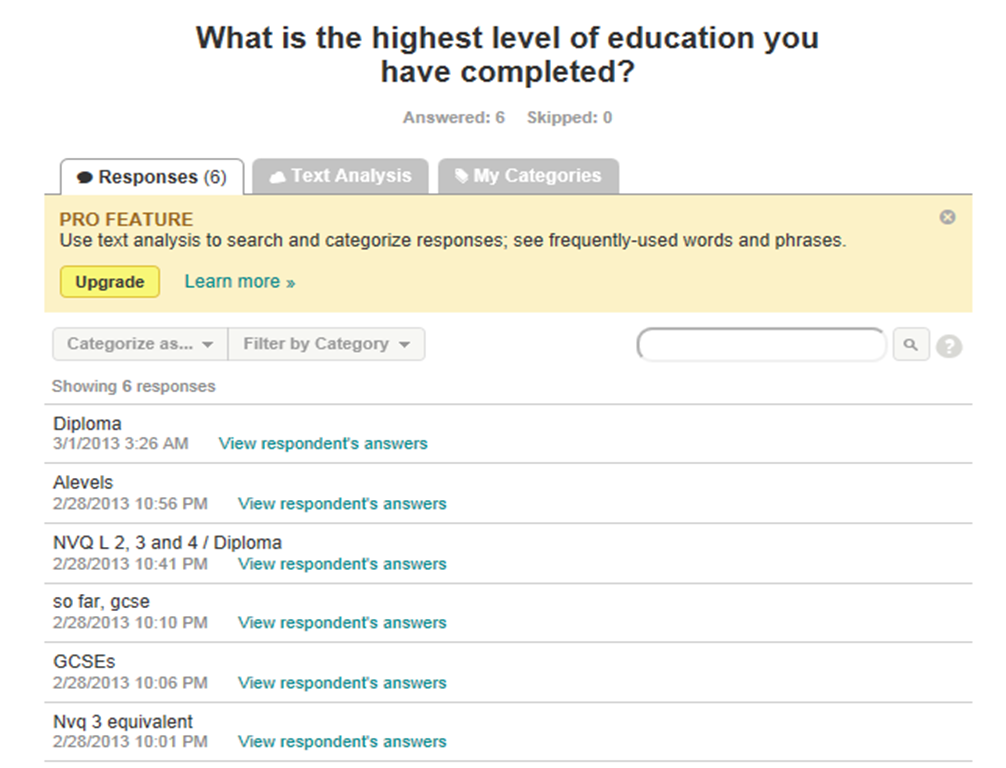
We asked people who watch horror films fill in this questionnaire and it was answered by 6 people


Psycographic Target Audience Questionnaire Results
this questionnaire was answered by 11 people


Results from hand out sheets (handed out to our age range in the Sixth Form study room)


Although some people answered no, some still gave use full information in the other questions.
People who answered yes (4 people)
age 16 - 0/4
age 17 - 3/4
age 18 - 1/4
age 19 - 0/4
Male - 1/4
Female - 3/4
Who they watch it with
Family - 0/4
Friends - 4/4
On their own - 0/4
Whether they have a job
Yes - 2/4
No 2/4
Do they buy the newest films out
Yes - 0/4
No - 2/4
Sometimes 2/4
How much are they willing to pay
£5-£10 - 1/4
£15-£20 - 2/4
£20+ - 1/4
What makes them buy films
Friends - 1/4
Family - 0/4
Adverts - 1/4
Social media - 0/4
Other - 2/4
Other answered = Personal preference
whether i like it or not
People who answered no
age 16 - 4/5
age 17 - 0/5
age 18 - 1/5
age 19 - 0/5
Male - 3/5
Female - 2/5
Who they watch it with (one person answered this question "i don't"
Family - 0/5
Friends - 4/5
On their own - 0/5
Whether they have a job
Yes - 2/5
No 3/5
Do they buy the newest films out
Yes - 1/5
No - 1/5
Sometimes 3/5
How much are they willing to pay
£5-£10 - 3/5
£15-£20 - 0/5
£20+ - 0/5
2 people answered other .......£5 - £15 and £5 - £20
What makes them buy films (people selected several answers)
Friends - 1 tick
Family - 2 ticks
Adverts - 3 ticks
Social media - 1 tick
Other - 2/4
Other answered = "I like owning a film instead of watching it online or just waiting for it to be shown on TV"
People who answered sometimes
age 16 - 0/4
age 17 - 2/4
age 18 - 2/4
age 19 - 0/4
Male - 0/4
Female - 4/4
Who they watch it with
Family - 0/4
Friends - 4/4
On their own - 0/4
Whether they have a job
Yes - 4/4
No 0/4
Do they buy the newest films out
Yes - 0/4
No - 1/4
Sometimes 3/4
How much are they willing to pay
£5-£10 - 3/4
£15-£20 - 1/4
£20+ - 0/4
What makes them buy films
Friends - 0/4
Family - 0/4
Adverts - 3/4
Social media - 1/4
Other - 0/4
TAP
TAP stands for Target Audience Profile. It is research and information about the target audience for our introduction sequence. The point benefits of having a TAP is that we can focus on that when we are planning so our title sequences is well suited for the ages it is aimed at. On top of this, it also gives us ideas and examples of what we should use when filming, for example, what should be shown. Having a TAP also helps our group stay on track, we are all working from the same ideas rather then all having different ones (although these can be included as well). It also means that our group can work more consistently and not having to stop to get more ideas as we have them there already. The TAP also helps us to stay on track, we can focus on what information we have got from our target audience and not go off track which in turn means that less missteps in our planning and development will take place. The TAP is now our main focus point.
Questionnaires are a good way of finding out information from our target audience. There are two different types of questionnaires, Demographic and Physographic.
Demographic questionnaires look at:
- Who the person is
- Their age
- Their gender
- Their job
- Their location
- Their marital status
- Their income
- Their education level
- Their nationality
So this is very much the person them selves and what type of people are interested in buying horror films, is it mainly single men? Do people with a lower income tend to bye less films? Does any of this really effect their film choices at all?
Psychgraphic questionnaires look at:
- Why they do what they do
- price sensitive customers
- weather people prefer to buy the newest, fashionable films
- and weather people are open to choosing new, unproven films
This questionnaire is very focused on what makes people bye the films they do.
I created one of each of this questionnaires on survey mokey and uploaded them on top my facebook page and then asked people to share the link so there was a wide range of people who could answer it. Below are the links to both my questionnaires.
Subscribe to:
Posts (Atom)